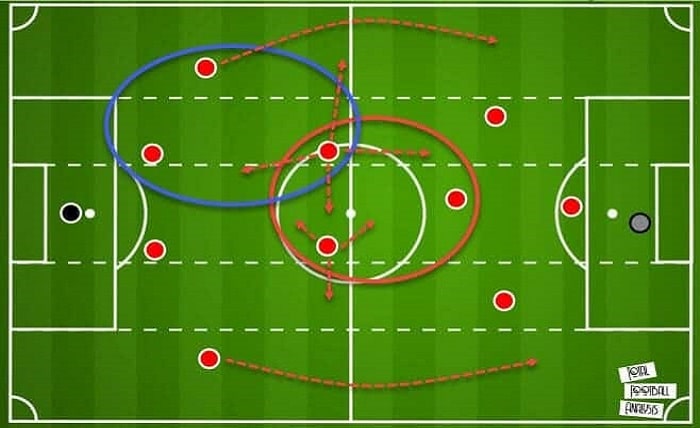
Pre-match analysis in football frequently defaults to superficial indicators such as recent league form, historical head-to-head records, and baseline goalscoring statistics. However, in the highly cerebral environment of the 2012/2013 Serie A campaign, these surface-level metrics regularly failed because they ignored the underlying tactical chess match played by the league’s managers. Italian football during this era was defined by deep structural adjustments, where a coach’s ideological commitment to a specific system could completely neutralize an opponent’s individual talent advantage. By analyzing the structural interactions between opposing managers, sophisticated bettors could accurately predict game states and isolate highly profitable value selections before a match even kicked off.
Why Managerial Identity Outweighs Squad Market Value in Italy
The financial disparities among Italian clubs during the 2012/2013 season often suggested straightforward outcomes on paper, yet elite teams frequently dropped points against drastically cheaper rosters. This phenomenon occurred because mid-tier and relegation-threatened coaches possessed the tactical sophistication to design highly targeted defensive game plans. When a manager successfully mapped their team’s low-block movements to close down the specific spaces favored by a top-tier playmaker, the talent gap evaporated, leading directly to inefficient closing lines that heavily penalized public favorites.
Furthermore, the rigid tactical education embedded in Italian football meant that managers rarely shifted their core defensive philosophies mid-season. A coach committed to a strict zonal marking setup would maintain those defensive rules regardless of the opponent’s individual brilliance. Understanding these fixed manager habits allowed analysts to look past generic motivation narratives and focus entirely on the physical space interactions that actually dictated match outcomes.
Decoding the Structural Dynamics of the Three-Back Revival
The definitive structural hallmark of the 2012/2013 Serie A campaign was the widespread adoption of the three-man defensive line, a trend heavily accelerated by Antonio Conte’s runaway success at Juventus. This tactical shift was not merely a defensive trend; it drastically altered how teams utilized wide spaces and managed defensive transitions. Understanding how a three-back manager matched up against a traditional four-back system was the foundational component of accurate pre-match forecasting during this period.
To help visualize how these conflicting formations typically interacted on the pitch, we must examine the specific pressure points created when contrasting tactical philosophies faced each other directly.
| Attacking System | Defending System | Primary Spatial Conflict Area | Expected Match Metric Outcome |
| Expansive 3-5-2 (Wingback Overlaps) | Rigid 4-4-2 (Flat Low Block) | Flank corridors behind the traditional fullbacks | High corner count and high cross volume for the 3-5-2 side |
| Narrow 4-3-1-2 (Diamond Midfield) | Compact 3-5-2 (Central Shield) | Central half-spaces outside the penalty box | Low-scoring midfield stalemate with high total foul counts |
| Vertical 4-3-3 (High Frontline Press) | Passing 3-5-2 (Buildup from Deep) | Half-spaces between center-backs and wingbacks | High turnover rate leading to rapid, multi-goal transitions |
Analyzing this structural mapping reveals that matches featuring contrasting wide systems rarely resulted in balanced, predictable flows. Interpreting these spatial conflicts allowed analysts to recognize that a flat four-back system would naturally struggle to track the deep, vertical runs of an advanced wingback, forcing central midfielders out of position and opening up high-probability shooting lanes. Consequently, pre-match bettors who filtered fixtures through these specific geometric interactions could confidently avoid overvalued favorites and extract consistent value from alternative spread selections.
How Managerial Adaptability Under Pressure Alters Pre-Match Value
While some Italian tacticians remained stubbornly committed to their preferred formations, others excelled at altering their structural setups to exploit the specific weaknesses of their weekend opponents. The ability to anticipate these pre-match adjustments required a deep review of a manager’s historical choices against distinct tactical styles. When an adaptable coach faced a dogmatic opponent whose system was highly predictable, the value inevitably tilted toward the flexible manager, who could engineer a custom tactical trap.
The Mechanism of the Midfield Screen Alteration
When facing a team that operated primarily through an advanced central playmaker, an adaptable manager would frequently drop a traditional box-to-box midfielder into a dedicated defensive screen role. This single adjustment completely disrupted the favorite’s attacking mechanics, turning a high-scoring offensive unit into a frustrated side forced into low-probability long-range attempts.
The Impact of Fullback Containment Directives
Flexible coaches often instructed their wide defenders to completely abandon offensive duties when matching up against elite wingbacks. By enforcing a strict stay-back directive, the manager effectively transformed a vulnerable four-back system into a temporary six-man defensive wall, thoroughly neutralizing the opponent’s primary attacking outlet.
The Operational Reality of Isolating Fixed System Vulnerabilities
Isolating managers with rigid, non-negotiable tactical identities provided data-driven analysts with highly predictable betting targets throughout the 2012/2013 season. Zdeněk Zeman’s high-wire 4-3-3 system at Roma represented the ultimate manifestation of ideological rigidity, as his teams pushed incredibly high defensive lines regardless of the opponent’s transition speed. Predictive models that accounted for this stubborn tactical approach consistently yielded highly accurate projections for high-scoring, bidirectional matches.
To systematically exploit these rigid managerial frameworks, serious bettors followed a precise analytical routine during the pre-match window.
1.Map the Opponent’s Structural Passing Tendencies:Phase 1: Passing Pattern Verification.
Analyze the target manager’s rolling three-match pass maps to isolate their primary distribution corridors. Verify if their buildup relies entirely on central vertical progression or wide flank circulation.
2.Measure PPDA Against Top-Tier Press Resistance:Phase 2: Pressing Intensity Evaluation.
Cross-reference the coach’s average Passes Per Defensive Action (PPDA) with the opponent’s midfield retention metrics. Determine if the defensive press will force turnovers or get bypassed systematically.
3.Calculate Space Availabilities via Defensive Lines:Phase 3: Transition Velocity Calculation.
Measure the average height of the opposition’s defensive block during possession phases. If a high line coincides with an opponent possessing elite recovery pace, adjust the match total projection upward.
Following this rigorous assessment protocol shielded bettors from the psychological trap of chasing public narratives regarding team motivation or dressing room morale. When the data verified that a manager’s fixed tactical system was fundamentally unsuited to handle an opponent’s specific transition speed, the probability of a structural breakdown increased exponentially. This analytical clarity allowed investors to confidently back underdogs or target alternative goals markets, knowing their capital was insulated by verified on-pitch geometric realities rather than speculative sports media gossip.
Incorporating Real-Time Managerial Adjustments into Modern Sports Hubs
Translating these historical tactical lessons into profitable modern wagering requires utilizing interfaces that can react fluidly to late breaking news, such as a manager changing their starting line-up an hour before kickoff. A sudden change in personnel frequently signals a complete shift in tactical intent, transforming a projected defensive low block into an aggressive pressing unit. Observation of these sharp line-up movements reveals that when situational variables align perfectly, securing your position on a highly responsive sports betting service like ufabet168 ensures that analytical bettors can lock in optimal lines before the market prices in the manager’s tactical adjustments. Having access to a platform that processes pre-match and live data movements without administrative lag is essential for extracting value from fluid tactical environments where a single managerial decision completely alters the statistical baseline of a fixture.
Diversifying Statistical Risk Management Beyond the Pitch
The cold, calculated mindset required to map out managerial space interactions and resist public sentiment applies directly to broader mathematical risk structures. A successful sports analyst does not view a wager as an emotional investment in a team, but rather as a statistical position on an undervalued probability distribution. Contrast this approach with standard public betting; an analytical investor who understands expected value will naturally seek out alternative platforms to maintain their mathematical edge during international breaks. When domestic football fixtures are unavailable, applying these identical principles of probability to the transparent digital mechanics found on a reputable casino online website allows players to keep their risk management instincts highly tuned. Whether analyzing the mathematical volatility of traditional table games or executing disciplined bankroll strategies across digital slot mechanics, maintaining a strict focus on statistical edges protects capital from the emotional volatility that routinely compromises untrained players.
Contextual Triggers that Invalidate Tactical Forecasting Models
Even the most thorough pre-match tactical assessment can be rendered completely obsolete by unpredictable environmental and administrative factors. A sudden downpour that floods the pitch right before kickoff will instantly neutralize a manager’s planned ground-passing buildup, turning a highly organized tactical scheme into an unpredictable battle of long balls and physical secondary duels. Furthermore, an early refereeing decision, such as a questionable red card within the first ten minutes, forces an immediate abandonment of pre-match strategies, forcing the teams into emergency damage-control setups that historical manager data cannot accurately account for.
Summary
Anticipating managerial intent and understanding structural formation interactions during the 2012/2013 Serie A campaign was the single most effective way to outpace public betting lines. Success required a complete rejection of generic table standings in favor of tracking spatial metrics, pressing intensities, and positional matchups along the flanks. By maintaining rigorous analytical discipline, filtering fixtures through verified passing structures, and utilizing highly responsive digital wagering interfaces, systematic sports investors successfully turned the complex tactical blueprints of Italian coaches into a reliable, long-term mathematical advantage.